
The Homestead Kitchen
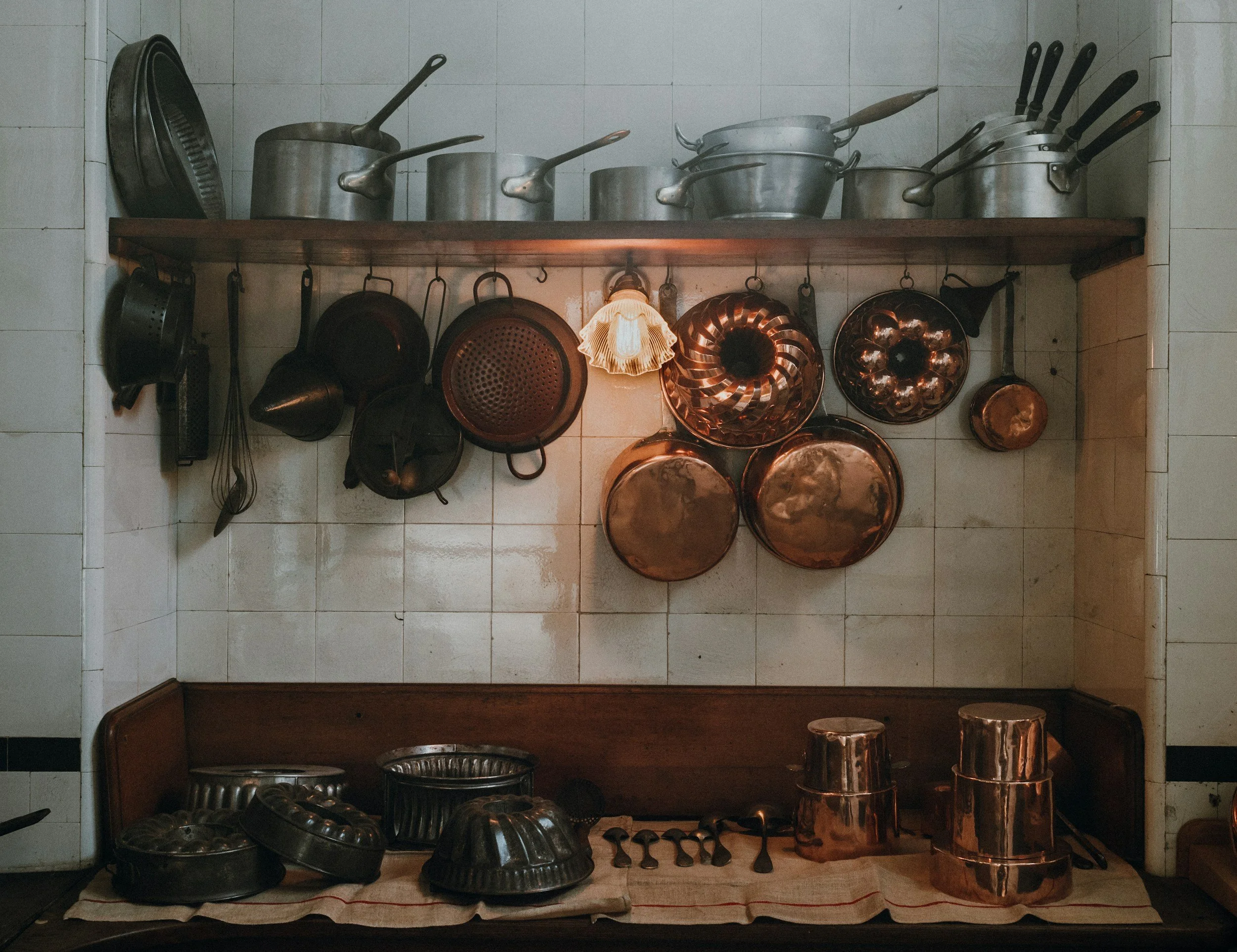
Let me start by saying that often, not always, a homestead kitchen is not like a normal kitchen. The amounts of food on hand are very different as well as the excess of items it takes to prepare for long term food storage. A mass of empty canning jars and rings, canners and all the paraphernalia, large stock pots, an excessive amount of extra bowls, some very large. Slicers and choppers, grinders and fermenting tools.
This list goes on and on, and when you think you don’t really need something and you throw it out or donate it, you discover that you actually would have loved to have that random thing to make the job a bit easier. Preserving food takes “stuff”! Canners, Dehydrators, freeze driers, the list could go on and on! It’s not a world of glamour, it’s not the Joanna Gaines kitchen you have seen that they call “farmhouse”. It’s usually messy and full of clutter.
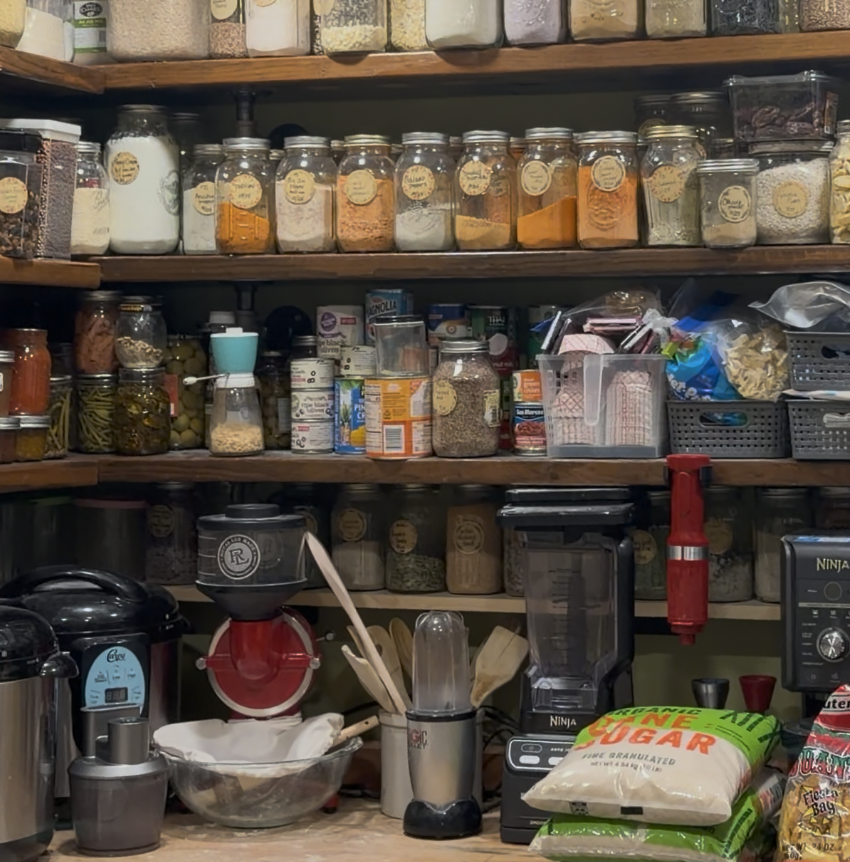
If all of this is new to you and you would like to start preserving, or homesteading, don’t expect to have it, or know what you need all at once. It is a constant work in progress, some items you think you need and don’t use and others you know will make a job a whole lot quicker.
Maybe you love to shred that cabbage by hand with a knife for the perfect uniform size, but when you do fifteen cabbages for sauerkraut in an afternoon you may prefer an alternative and be wishing for that food processor you by-passed as not needed.
Five gallon buckets of grains or sugar may seem ridiculous when you’re close to the store, but what happens when the store is an hour away or you simply can’t get there because you have sick kiddos at home for a few days. A homestead kitchen is about being prepared. It takes planning ahead, calculating what you may need, and stocking up when you can. That may mean, canning from the garden or it could mean buying in bulk or from a local farmer when items are in sesason.
I want you to know, it could take years to build a homestead kitchen! Collecting items and having a place to store things, learning the skills and devoting the time to food that you may eat six months or even a year from now. Take the small steps that eventually will lead you to food freedom. A life where you don’t depend on the grocery store to get by. A life where you shop from your freezer and pantry and know where your food came from, what it was sprayed with, or that it’s free from additives like red dye 40!
This will be hard work and one of the most life changing things you can do for your family! You will give them health and teach them the difference of what a body feels like that is fueled by healthy foods.
If anyone needs help or encouragement along this path, reach out to me! I would love to hear your stories and encourage you on your journey to a homestead kitchen and all that it encompasses! Visit my page of my favorite homestead kitchen items and why I love them for some ideas.